Michael J. Buonsanto Memorial Lecture Series
For a list of past speakers, please see the Buonsanto Memorial Lecture Series archive.
Buonsanto Lecture 2026
The 25th annual Michael J. Buonsanto Memorial Lecture will be presented by Ivan Glakin of UMASS Lowell. The Buonsanto Lecture topic this year is “Title.”
Date: Day, Date, 2026
Time: 3:00 p.m. ET (Eastern time)
The 2026 Buonsanto Lecture will be held both in person and online via Zoom.
The zoom link for online attendees is: Zoom Link needed.
Please RSVP to Heidi at heidij@mit.edu if you plan to attend the lecture in-person at Haystack.

Michael Buonsanto was an early leader in ionospheric storm studies. He possessed a remarkable talent for synthesizing scientific insights from a diverse array of measurements and instruments. His work rested on three key pillars: scientific collaboration, innovative analysis techniques, and the integration of observations with modeling and theory. He organized numerous community workshops on this topic and published a seminal paper, “Ionospheric Storms, A Review” (Buonsanto 1999). Michael’s pioneering research was instrumental in identifying large mid-latitude electron density gradients associated with ionospheric storms—a precursor to the significant recognition of the space weather impacts associated with ionospheric storms that occurred when the FAA’s WAAS system became operational in 2003.
Update: This lecture by Anthea Coster will explore the remarkable progress made over the past 25 years in understanding ionospheric storms, driven by advances in instrumentation, measurement methodologies, and ionospheric modeling. It will highlight the growing importance of space weather research and offer a reflective overview of developments in radio remote sensing instrumentation and data analysis techniques, emphasizing the enduring influence of Michael’s contributions. Finally, the lecture will look ahead to the opportunities and challenges that await the next generation of space weather research.
About the Speaker
Need
About the series
Dr. Michael J. Buonsanto (1952–1999) was a key member of the Atmospheric Sciences Group at MIT Haystack Observatory from January 1988 until his sudden and untimely death on 21 October 1999. As an MIT Principal Research Scientist, he made many important scientific contributions to studies of the Earth’s upper atmosphere, and was an outstanding and cherished colleague, mentor, and friend. In his honor, Haystack Observatory has established an annual memorial lecture on space science topics at the forefront of the atmospheric science research field.
At Haystack, Buonsanto specialized in mid-latitude physics and chemistry of the upper atmosphere and effects of magnetic storms, significantly advancing these fields worldwide through numerous publications done in wide-ranging collaborations with members of the international aeronomy and space physics community. He was the driving force behind the highly productive US Coupling Energetics and Dynamics of Atmospheric Regions (CEDAR) program’s STORM working group, and was elected to the CEDAR Science Steering Committee. Despite his short career, Michael’s scientific output was prodigious, authoring over 70 refereed scientific articles. He was the single author on 13 of these articles, most notably his 1999 ionospheric storms review paper which continues to be highly referenced today with 650+ citations.
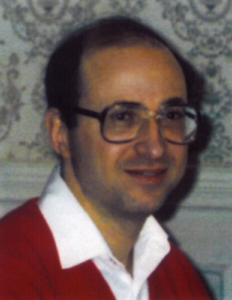
Buonsanto was a graduate of Northwestern University and received Masters degrees in Education and Astronomy from Tufts University and Boston University, respectively, working with Professor Michael Mendillo. He earned his PhD in Engineering from the University of Auckland (New Zealand) under Professor John Titheridge, and devoted most of the 1980s to religious education, teaching, and ionospheric research while living among the people of the Fiji Islands. Michael’s career was characterized by intellectual honesty along with a deep openness and willingness to work with and educate others. Students from middle school to graduate school reaped numerous benefits from his dedicated guidance and supervision. Postdoctoral researchers, visiting scholars, and fellow researchers spanning the globe (whose only contact with him was sometimes online) received his full attention and careful assistance with the datasets needed to further their research.
Buonsanto was an excellent and organized scientist whose many seminal contributions span a wide range of topics in ionospheric physics. His untimely death was a great loss to the community. Michael’s work continues today through the lasting international impacts of his insightful physics, enduring journal articles, research by former students, and in the efforts of his dedicated scientific colleagues.