Haystack 37m Telescope Astronomy Program
A New Era for a Historic Telescope
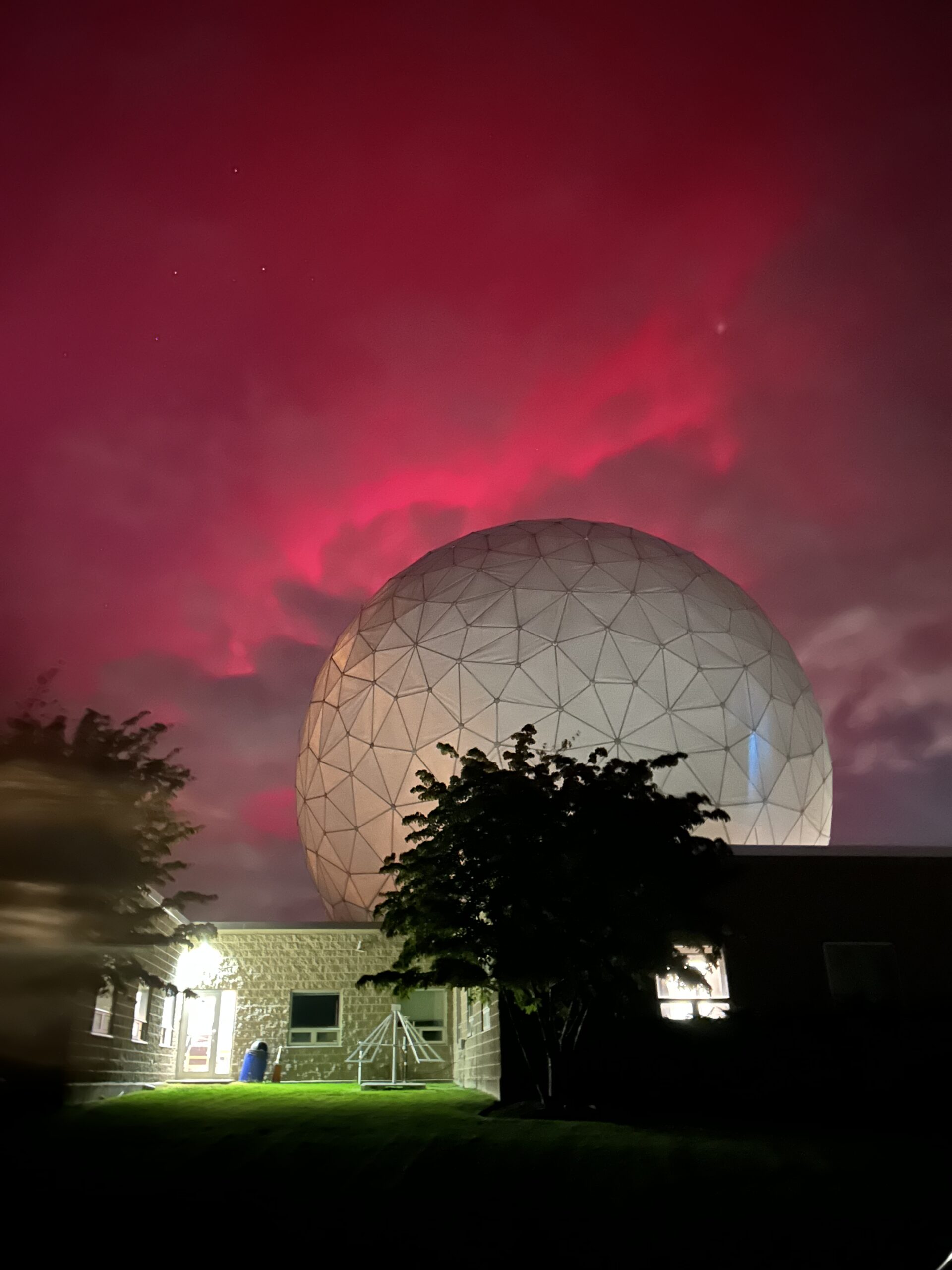
The Haystack 37m Telescope Astronomy Program (HTAP) is advancing one of the most capable and versatile radio telescopes in the United States into a new era of discovery. The Haystack 37m Telescope, with its high surface accuracy and radome-protected design, combines exceptional sensitivity with operational flexibility across a wide range of frequencies.
Building on decades of innovation— from pioneering VLBI to foundational studies of star formation—the program now focuses on delivering cutting-edge astrophysical research, hands-on education, and rapid-response observing capabilities.
More general information on the telescope and its radome is available on the Haystack 37m Telescope page.
Unique Avenues in Research and Education
Key areas where the Haystack 37m Telescope can deliver insights and capabilities unlike any other telescope serving astronomers today include:
Revolutionizing flexible investigations of potentially hazardous asteroids Increasing surveillance of the sky at optical wavelengths results in an increasing number of newly discovered asteroids. Observations at optical wavelengths can be used to identify objects that might impact Earth, but radio observations are needed to measure the size of asteroids. With MIT’s direct access to the instrument, the Haystack 37m Telescope can respond to new detections in a uniquely flexible and sensitive fashion. The information collected by the instrument will be essential in mitigating risks from hazardous asteroids and broadening our general understanding of the solar system. The Haystack 37m Telescope contributes to such work as part of MIT’s Planetary Defense Project.
Breakthroughs in the cosmic history of star and planet formation through chemistry Stars form out of dense molecular gas clouds in space. The chemical makeup of these clouds encodes information on how stars form, and it influences the composition of the planets around these stars. Our knowledge about the astrochemical makeup of gas clouds is still limited, as observations are time-intensive. Haystack Observatory has designed a millimeter-wave “camera” that will for the first time provide the observational speed needed to comprehensively study molecular gas across large sections of the Milky Way, delivering detailed data for our home galaxy and informing us about star and planet formation in the distant and early cosmos.
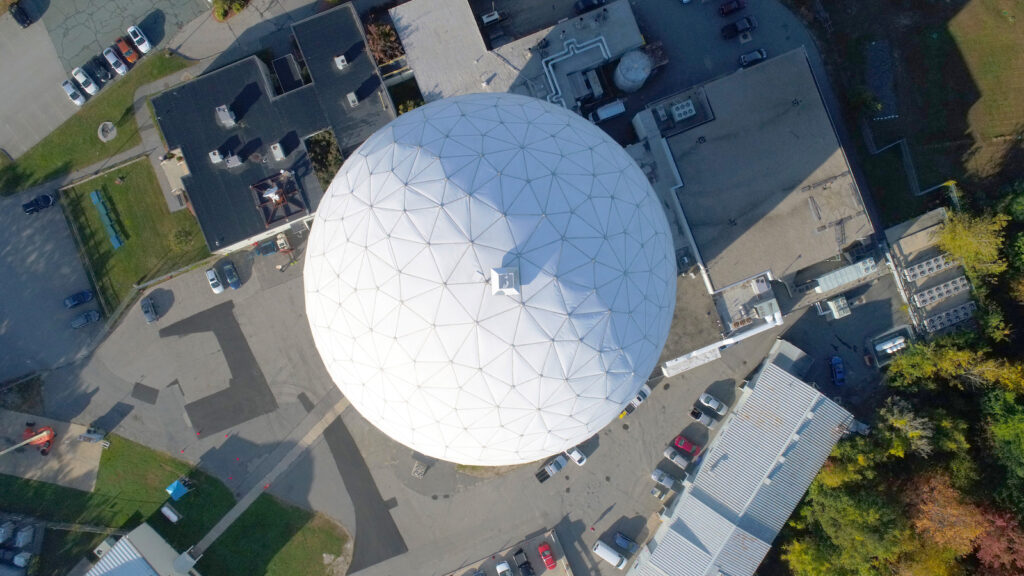
Unique hands-on access to a research-class telescope for education and public engagement The open campus of Haystack Observatory is within easy driving distance from numerous universities and metropolitan areas in the northeastern United States making it the most accessible research-class telescope in the world. The instrument is currently open for public tours and is used by visiting project students. The Observatory seeks to expand tours and hands-on observing programs for larger groups from the research community and general public.
Revealing distorted spacetime near black holes Haystack Observatory is a lead organization within the Event Horizon Telescope (EHT), a project that connects radio telescopes worldwide to take resolved pictures of black holes. The EHT is evolving from taking individual images to taking “movies” of the structure around black holes that span hours to weeks. Such data reveal how spacetime swirls around black holes, providing information on fundamental physics and the mechanisms by which black holes influence their host galaxies. The Haystack 37m Telescope is already contributing to such research; future upgrades will make the instrument one of the core sensors within the EHT.
The Haystack 37m Telescope program is structured to grow through strategic partnerships at every scale. A $50,000 partnership delivers immediate returns—sharper efficiency, expanded observing capability, and deeper student engagement. Investments from $100,000 to over $1 million unlock transformative upgrades: new scientific capabilities and public access programs that bring the research community and general public to the telescope firsthand.
Technical Capabilities
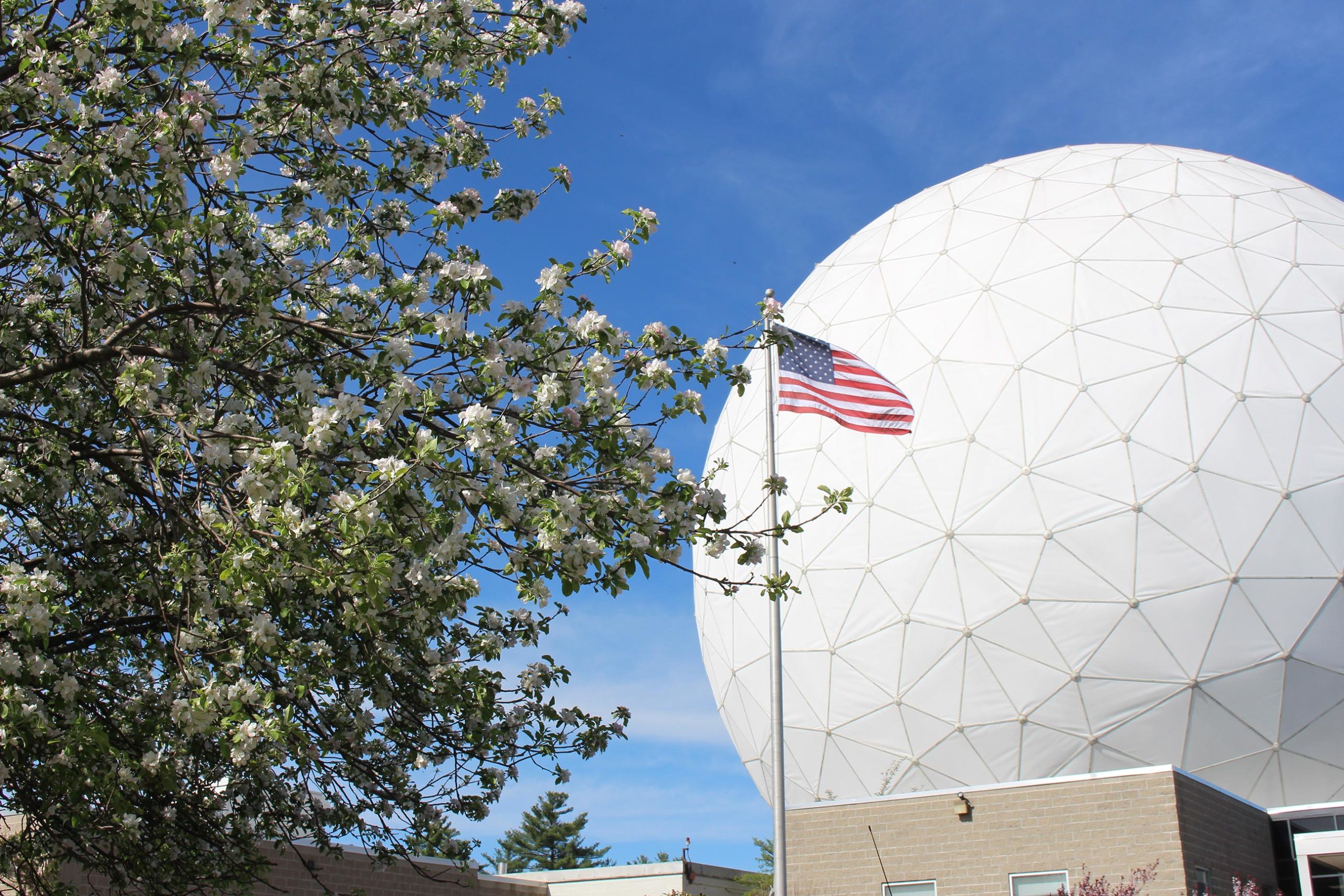
The Haystack 37m Telescope combines unique engineering features with diverse radio instrumentation:
- A 37-meter diameter antenna with >1 deg/s slew speed and ≤100 µm surface accuracy
- Receivers spanning frequencies from K-band (18–26 GHz) to W-band (up to ~115 GHz)
- Radome enclosure enabling stable observations under a range of weather conditions
- Digital backends for single-dish spectroscopy and continuum observations
- VLBI capability with wideband recording systems
Ongoing upgrades aim to expand bandwidth, improve sensitivity, and enable multi-band observations, positioning the telescope as a leading-edge facility for both single-dish and interferometric science. A snapshot of instrument capabilities in 2023 is provided in a reference publication.
Project Team
Please contact Jens Kauffmann about any questions concerning the Haystack 37m Telescope Astronomy Program.
- Jens Kauffmann (Program PI)
- Ganesh Rajagopalan (Program Engineer)
- Rigel Cappallo
- Joseph Crowley